Beaches and nature
El Yunque: which trails, and how to get in
A practical El Yunque guide — getting in (free, no reservation as of 2026), the best trails and waterfalls, what to wear, and the easy walks with children.
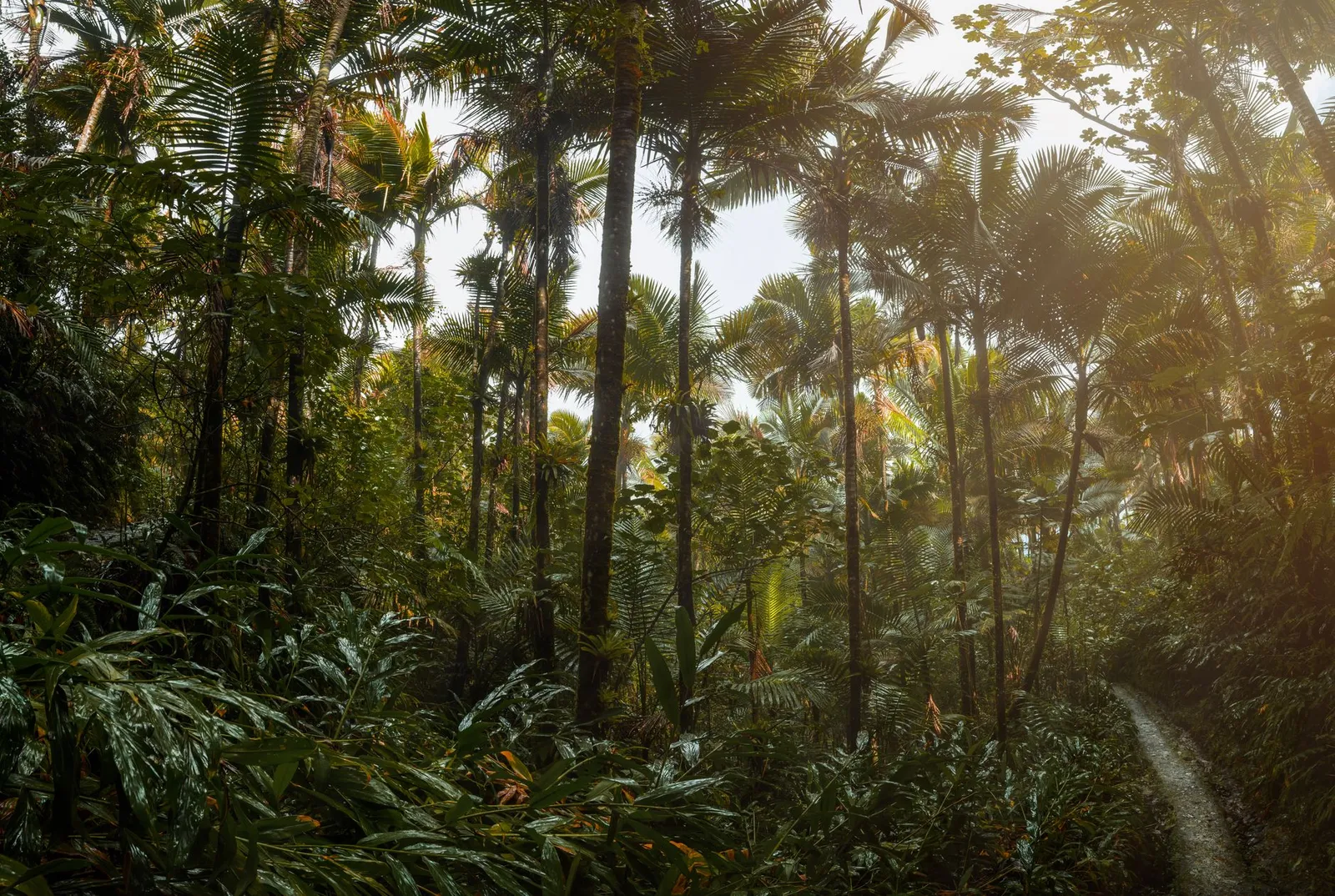
El Yunque is the only tropical rainforest in the US National Forest System, it sits about 40 minutes east of the San Juan airport, and it is the one day trip almost every visitor takes. It is also the one most often got wrong: people arrive after the car parks have filled, go to the wrong end, or turn back when it starts raining — in a rainforest.
Getting in: free, and no reservation (for now)
Entry to the main visitor corridor along PR-191 is free, and as of 2026 needs no reservation. It is open from 8 a.m. to 5 p.m., and the Forest Service manages visitor numbers around the parking. That has not always been so: timed-entry vehicle reservations, booked through the federal recreation site, have been switched on and off in recent years.
Source: the Forest Service's El Yunque conditions page, updated February 27, 2026.
A handful of things follow from that:
- Check the Forest Service's El Yunque conditions page the week you go, in case reservations are back.
- Arrive early. Capacity is managed by parking, so a late start on a weekend can mean waiting — or turning back.
- If the corridor is full, the forest is still visitable — see the other ways in, below.
The roadside stops
You do not have to hike to see the forest. PR-191 climbs through it with pull-offs at the best bits:
- La Coca Falls — a broad waterfall sliding over a rock face directly beside the road, a few minutes past the entrance.
- Yokahú Tower — a stone observation tower with a staircase inside and a view out over the forest canopy to the coast.
- Juan Diego Falls — a short scramble from a pull-off to a small cascade and pool. The lower fall is easy; the upper one is a slippery climb.
- El Portal Visitor Center — the interpretive centre near the bottom of the road, with an elevated walkway through the canopy.
The trails worth your legs
Big Tree Trail
The most popular walk in the forest: a paved and boardwalked path descending through tabonuco and sierra palm to La Mina Falls. It is not long, but it is downhill going in, which means it is uphill coming out, and it is busy from late morning.
Mount Britton Tower
A steady climb on a paved trail to a stone tower built in the 1930s. On a clear afternoon you can see both coasts; in cloud you see a wall of white and hear nothing but water. Both are worth doing.
El Yunque Peak (Los Picachos and the summit trails)
The long option — a sustained climb through dwarf forest to the high ridge, where the trees shrink to shoulder height and the moss takes over. Give it most of a morning and expect to be wet.
Angelito Trail
Short, flat, shaded, and off PR-988 rather than the main corridor — so it still works when the corridor car parks are full. It ends at a river pool on the Río Mameyes. The easiest rainforest walk on the mountain and the best one with small children.
Other ways in
If the main corridor is full — or reservations return and sell out — you still have options in and around the forest:
- The PR-988 side — Angelito trail and the Río Mameyes river access.
- The southern approach from Naguabo, which reaches a different set of trailheads and sees a fraction of the traffic.
- Guided tours, which handle access and parking themselves and usually include hotel pickup.
- The river pools and natural water slides on the roads below the forest boundary, several of which sit on or beside private land — go with an operator, or stick to signed public access.
Getting there, and when to arrive
The forest is about east of the San Juan airport on PR-3, then up PR-191 from Palmer. There is no public transport to the gate, so it is a rental car or a guided tour.
Arrive close to the 8 a.m. opening, for three reasons, in the order they will affect your day:
- Cloud builds as the day goes on. The high viewpoints are clearest in the morning and frequently white by mid-afternoon.
- Parking at the popular trailheads fills, and the pull-offs on a narrow mountain road are not infinite.
- Afternoon rain is heavier. Rivers rise quickly, and a pool that was still at ten can be moving fast by three.
Leave daylight at the other end too. The road down is winding and unlit, and there is no reason to drive it in the dark when the coast is fifteen minutes away.
What to wear and carry
- Shoes with grip. Wet rock, wet boardwalk, wet roots. Trainers with worn soles are the most common mistake in the forest.
- A light rain shell, not an umbrella. It rains most days, usually briefly.
- Water and a snack. There is little for sale once you are up the mountain.
- Swim things and a quick-dry towel if you plan on a pool.
- Insect repellent — dengue circulates in Puerto Rico and repellent is a sensible default anywhere with standing water.
- A dry bag or a zip bag for your phone.
Leave nothing visible in the car at a trailhead.
What you are actually looking at
The forest changes as you climb: tabonuco lowland forest at the bottom, palo colorado and sierra palm in the middle, and dwarf or "elfin" forest on the highest ridges, where constant cloud and wind keep the trees small and everything is upholstered in moss and bromeliads.
The soundtrack is the coquí — small tree frogs, named for their two-note call, which start up at dusk and are far louder than an animal that size has any right to be. The forest is also the stronghold of the Puerto Rican parrot, one of the rarest parrots in the world and the subject of a long-running recovery programme. Seeing one is luck, not planning.
Making a day of it
The natural pairing is the rainforest in the morning and Luquillo in the afternoon: Balneario Monserrate for a calm, lifeguarded swim and the kiosks beside it for a late lunch of alcapurrias and pinchos. Salt after rain, in the right order.
Staying out this way for a night or two turns the drive from a commitment into one of about , and puts you close to Fajardo for a bioluminescent bay the same evening.
Where to stay near El Yunque
The closest base is Luquillo, on the coast at the bottom of PR-191, with a lifeguarded balneario and the kiosks for afterwards. The PR-191 entrance is about away. Luquillo itself is about from the San Juan airport, so a morning flight can still make the 8 a.m. opening.
Times: our calculation on OpenStreetMap data, © OpenStreetMap contributors (ODbL)
Common questions
Do you need a reservation for El Yunque?
Not as of 2026. Entry to the main PR-191 corridor is free and the Forest Service requires no reservation; it is open 8 a.m. to 5 p.m. It has used timed-entry reservations before, so check its El Yunque conditions page the week you go.
How long do you need at El Yunque?
Half a day covers the roadside stops and one trail. A full day lets you add a longer hike and a swim, and still get to the coast before dark.
Can you swim in El Yunque?
Yes, in the river pools below several of the falls, when conditions allow. Water levels rise fast after heavy rain upstream, so take posted warnings seriously.
Where to stay
Homes near everything in this guide
Keep reading